Why a Citrus Twist Releases Its Aroma
Learn why a citrus twist releases its aroma, how peel shape and expression change the first impression, and where to place it on a drink.
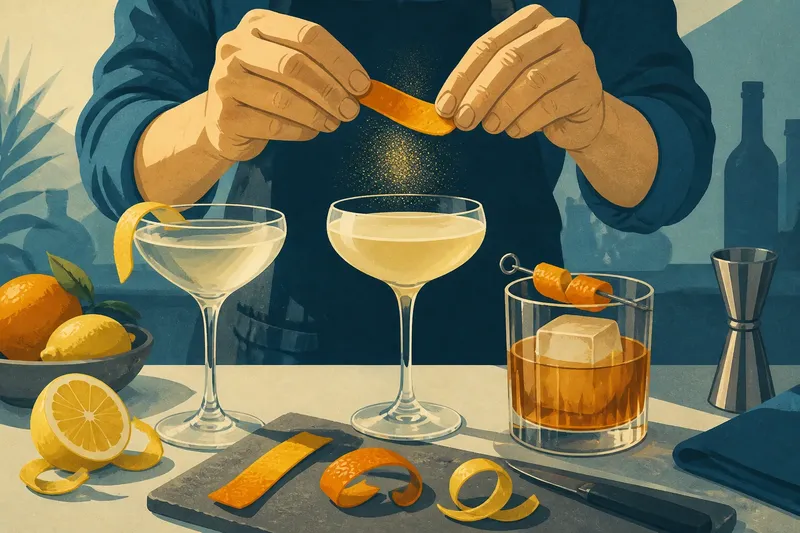
A bartender pinches a strip of orange peel over a coupe, and a fine mist catches the light before the peel lands on the rim. That small gesture is the point of a citrus twist: expressing the peel releases aromatic oils that reach the nose before the first sip. The cut, the pressure, and the final placement all affect what a drink announces.
There are three useful approaches: a broad, expressed strip laid across or beside the rim; a narrow, expressed strip used as a compact accent; and an unexpressed twist, chosen when a quieter citrus note is wanted. None is the universal choice. The right one depends on the drink’s aroma, the glass, and whether the garnish should meet the nose immediately or arrive more subtly.
Expression releases the peel’s aromatic oils
The colored outer skin of citrus contains tiny oil-bearing structures. When the peel is bent or pinched, some of that oil is released as droplets and mist. Its scent is volatile, so it travels readily into the air around the glass. That is why an expressed twist can make a drink smell recognizably of lemon or orange before the liquid reaches the palate.
Aroma is part of flavor, but the two are not identical. A twist can make a drink seem brighter, more fragrant, or more distinctly citrus-led without adding juice. It also contributes little liquid compared with a squeeze of fruit. This makes expression useful when a recipe needs the smell of citrus but not its acidity or dilution.
The force should suit the peel. A gentle bend can release enough oil for a delicate drink; a firmer pinch can put a more obvious cloud above a robust one. Crushing the strip is not the goal. Too much handling may leave a damp, battered garnish and can bring the bitter white pith into greater contact with the drink. Treat the peel more like a small spray bottle than a piece of fruit to wring dry.
A broad strip gives the most immediate citrus signal
A broad strip has more exposed colored skin and is easy to hold while expressing. It works well when the drink is served in a coupe, martini glass, or rocks glass, where the garnish can sit near the rim without disappearing into the liquid. Its larger surface also makes the citrus scent easier to notice as the glass is lifted.
Cut the strip from the colored outer peel, keeping the white pith relatively thin. A channel knife makes a tidy ribbon; a sharp paring knife or vegetable peeler can produce a wider strip. If the strip is long, trim it to suit the glass rather than letting it trail into the drink like an improvised bookmark.
After expressing, place the strip with its outer skin toward the drinker’s nose or resting just inside the rim. The oil travels into the air, so the garnish need not float in the liquid to do its work. A strip on the far side of a glass may look composed but give a weaker first impression than one where the drinker naturally brings their face.
This approach suits drinks whose aroma can carry the garnish: a gin martini with lemon, a whiskey drink with orange, or a sparkling cocktail whose bubbles already lift scent. It is less suited to a crowded rim or a drink with a delicate aroma that the peel would dominate.
A narrow twist keeps the garnish discreet
A narrow twist is useful when a full strip would crowd the glass or make the presentation feel heavy. A slim curl can rest on the rim, sit on a cocktail pick, or be tucked beside a large ice cube. Its smaller surface usually gives a less forceful citrus impression than a broad strip, though the exact result depends on the peel and how firmly it is expressed.
Use a channel knife for a narrow ribbon, or trim a wider piece into a slimmer shape. A short twist is easier to position and less likely to brush the drinker’s face. If the garnish is curled, it can hold its shape around a pick or over the rim; if it is left flat, it presents the colored peel more directly.
Express a narrow strip with a controlled pinch rather than a hard squeeze. Then decide whether the citrus should be smelled at the rim or seen as a small accent beside the glass. A twist perched at the rim puts the aroma close to the nose. One placed inside the glass can add a quieter scent while sharing space with the liquid, ice, or other garnish.
This option suits drinks with several aromatic ingredients, where a small citrus note should join rather than lead. It also suits smaller servings and narrow glassware. If the drink is already strongly citrus-forward, a restrained twist can provide a fresh peel aroma without adding another conspicuous strip.
An unexpressed twist gives a softer first impression
A twist does not have to be expressed. An unpinched strip can serve as a visual cue and offer a faint peel scent near the rim, especially if the colored side faces outward. This is a reasonable choice when the drink’s own aroma should remain prominent or when the garnish is meant to signal an ingredient rather than add a strong scent.
Because the oil is released by bending and handling, a carefully placed unexpressed peel generally makes a quieter aromatic contribution. It may still release some oil as it rests or is moved, so “unexpressed” does not mean scentless. The distinction is practical: no deliberate mist of oil is sent over the surface of the drink.
Use an unexpressed twist when a drink is subtle, when a more assertive peel would compete with floral or herbal notes, or when the garnish’s shape matters more than an immediate burst of citrus. It can also be placed on a pick away from the drinking edge, where it remains visible without putting its full aroma directly beneath the nose.
Say you are serving a delicate vodka cocktail with a quiet floral aroma in a coupe. A broad, firmly expressed lemon strip could take over the first impression. A small unexpressed twist on the far edge of the rim would keep the citrus visible and present, while leaving the floral scent more room to reach the drinker.
Cut and placement change what reaches the nose
Cut controls both the amount of peel and the way it behaves. A wide strip is easy to express and offers a broad aromatic surface; a narrow ribbon is easier to curl and place discreetly. A neat edge can make the garnish look intentional, but clean cutting also matters for handling: ragged strips are harder to position and may shed bits into the glass.
Placement controls proximity. On the rim, a twist meets the nose as the drinker sips. Inside the glass, it sits closer to the liquid and can mingle with its aroma. On a pick or beside the glass, it may be more decorative and less direct. Choose a position that makes sense for the glass’s shape and the path of the first sip.
For a drink served over ice, a twist can rest against a large cube or sit at the rim. A piece buried among smaller ice may be difficult to see and can become awkward to retrieve. For a stemmed drink, a light strip across the rim or a short curl on the edge is usually easier to manage than a long ribbon dangling into the bowl.
Use fresh, clean citrus with firm skin, and remove only the colored outer layer when a recipe calls for peel rather than pith. The fruit variety changes the aroma: lemon tends to read as sharp and bright, while orange often suggests a rounder, sweeter scent. These are broad sensory impressions, not rules; the drink’s other ingredients influence what a nose notices.
Which citrus twist should you choose?
Should every citrus twist be expressed?
No. Express the peel when the drink benefits from a clear citrus aroma at the first sip. Leave it unexpressed when the garnish should remain a quieter visual cue or when a strong peel scent would compete with more delicate aromas.
Which side of the peel should face the drink?
For expression, hold the strip with its colored outer skin toward the drink and pinch or bend it so the oil mist travels over the surface. For placement, keep that colored side where it can face the drinker’s nose; the pith is pale and does not provide the same aromatic contribution.
Can the twist sit inside the glass?
Yes, if it will not interfere with the first sip or become difficult to handle. A twist inside the glass can mingle with the drink’s aroma, while one on the rim gives a more direct scent at the moment of drinking.
What if the peel tastes bitter?
Check whether the strip includes a thick layer of white pith or has been left in the drink for a long time. Use a thinner cut from the colored outer skin and place it where the drinker can remove it easily if the flavor becomes distracting.
Choose the twist by the first sip
Start with the question of what should reach the nose first. If the answer is citrus, choose a fresh strip, express it, and place it near the drinking edge. If citrus should be present but secondary, use a narrow twist or leave a small one unexpressed. If the drink already has a strong aroma, keep the peel modest and place it where it will not dominate.
Then check the glass. A wide rim can carry a broad strip; a narrow opening may suit a compact curl. The garnish should be easy to notice and easy to drink around. If it blocks the first sip, slips into the liquid, or forces the drinker to move it before tasting, the cut or placement needs adjustment.
The useful distinction is not elaborate technique but timing: an expressed citrus twist puts aroma in the air before the drink arrives, while its shape and position decide how close that aroma comes. For a composed drink, a restrained cut and deliberate placement often make a better first impression than simply adding more peel.