Fresh Herbs or Dried Herbs at the Finish?
Fresh herbs or dried herbs at the finish? Compare how each behaves on hot soup, crisp bread, and cool dips to choose a garnish that suits the dish.
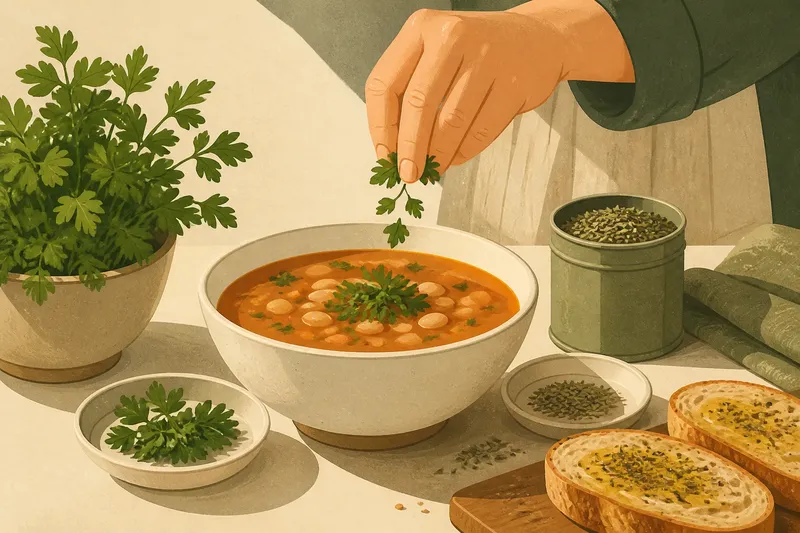
A bowl of tomato soup sits beside a bunch of basil and a tin of oregano. Choosing fresh herbs or dried herbs at the finish is less a contest between the two than a question of how each behaves on that particular food. Fresh leaves arrive as leaves; dried herbs arrive as small, dry fragments. The difference affects how a bite feels as much as how it looks.
Fresh leaves make a distinct edible element
Fresh herbs work well when the leaf itself belongs in the bite. A whole cilantro leaf can sit on beans, chopped chives can spread across a baked potato, and torn mint can mingle with yogurt. Each remains recognizable, so diners can see what they are eating and decide how much to gather on a fork.
Leaf size matters. A broad basil leaf can overwhelm a small spoonful, while finely chopped parsley spreads more evenly. Tender dill suits a cool cucumber salad; a woody rosemary needle may be unpleasant whole. Chop, tear, or remove stems according to the herb’s texture and the way the dish will be eaten.
Fresh herbs also add moisture. That is welcome on a warm potato or a thick soup, but less useful on crisp bread, where wet leaves can soften the surface. Add delicate leaves shortly before serving, especially over hot food, so they are less likely to wilt before the meal begins.
Dried herbs act more like seasoning than leaves
Dried oregano, thyme, and marjoram can lend an herbal note without introducing a separate leafy texture. Their small pieces are easy to distribute across a moist dish, where warmth and moisture can soften them. On dry toast or a cool, smooth dip, coarse flakes may remain papery instead.
Crush dried herbs between clean fingers when the pieces look large, then scatter a little over a spoonful before using them on the whole dish. If the fragments still feel scratchy or their flavor dominates, use less or skip them as a finishing garnish. Dried herbs often make more sense during cooking, when they can mingle with the food rather than sit exposed on top.
Check the jar before using it. If the aroma is faint or stale, the herb is unlikely to add much at the table; leave it out rather than compensating with a heavy shake. A garnish should not have to shout to be noticed.
Match the herb form to the food and service
Use these checks before finishing a dish:
- Observation: the food is hot and delicate leaves are already soft. If they are likely to wilt, then add them at the table; alternatively, choose a sturdier chopped herb.
- Observation: the surface is dry and crisp. If fresh leaves could soften it, then keep them off the crisp area; alternatively, serve them alongside.
- Observation: a moist soup or dip can absorb small flakes. If dried herbs soften in a spoonful, then scatter them lightly; alternatively, use fresh chopped herbs.
- Observation: the pieces are coarse or woody. If they remain awkward to chew, then chop or crush them more finely; alternatively, omit them.
- Observation: the dish will wait before it is served. If tender leaves may wilt, then add them at serving; alternatively, use a restrained dried-herb seasoning.
- Observation: the jar smells dull or the leaves look limp. If the herb seems tired, then leave it off; alternatively, choose a sound herb or serve the dish plain.
Imagine a cook has a warm bowl of white bean soup, chopped parsley, and dried thyme, and the table is not yet ready. The cook tries a pinch of thyme on one spoonful; the flakes stay noticeable, so that option is set aside. The soup is kept warm while the table is prepared, then a few parsley leaves are torn over each bowl at serving. The result should be a fresh, visible finish without asking the leaves to wait on the hot soup.
For a different surface, consider crisp toast with olive oil. Fresh leaves may dampen the crust, while coarse dried oregano may feel scratchy. Finely crushed oregano can be tried on one corner; if it still distracts, leave the toast plain or serve the herb in a small dish for diners to add themselves.
Why do fresh and dried herbs behave differently?
Do fresh herbs belong on hot food?
They can, but delicate leaves may wilt on steaming food. Add them just before serving, or choose a sturdier herb if the dish needs to wait.
Can dried herbs finish a cold dish?
Yes, when the surface is moist enough to soften the pieces. On a dry or cool surface, coarse fragments can remain brittle and noticeable.
Can fresh and dried herbs be used together?
Yes, if each has a separate job, such as dried thyme mixed into a dish and chopped parsley added at the table. Keep the amount modest so the flavors do not crowd the food.
How should the amount be adjusted?
Start with a little on one spoonful or corner, then taste and check the texture. Add more only if the herb suits the bite; recipe quantities for cooking are not automatic finishing amounts.
Use fresh herbs or dried herbs at the finish with restraint
Fresh herbs or dried herbs at the finish should suit the food’s texture and the moment it reaches the table. Fresh leaves offer an edible shape and can add moisture; dried herbs provide smaller fragments that may soften on warm, moist food. The choice is a little like choosing a napkin or a placemat: the material should fit the surface it touches.
If neither form improves the bite, serve the dish without a garnish. A quiet bowl of soup is better than one wearing tired leaves like a hat it did not ask for.