The Long Journey of the Maraschino Cherry
The maraschino cherry’s changing forms explain why one garnish can taste floral, sweet, or crisp—and how to choose a style that suits a drink.
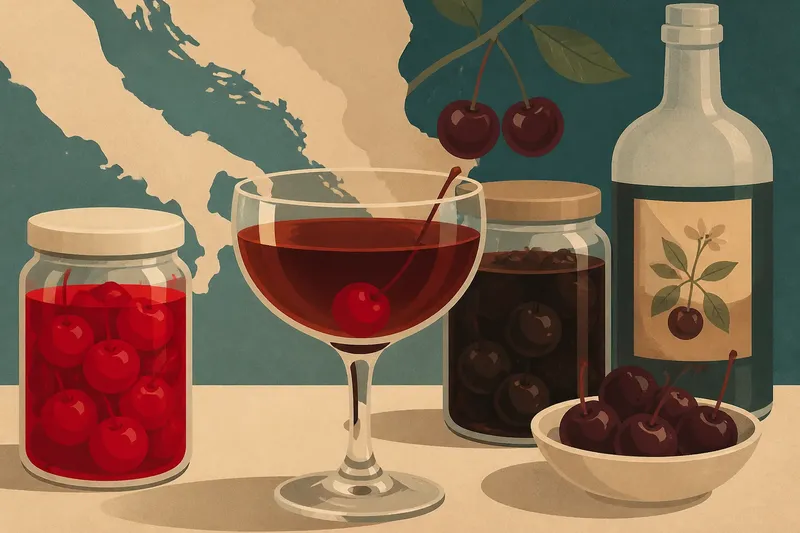
A red cherry settles at the bottom of a Manhattan, looking as if it has been there since the glass was invented. The maraschino cherry has a less tidy history: the name is associated with Adriatic marasca fruit and liqueur, while many familiar bar cherries are distinct products made in other styles.
That difference matters at the point of service. A bartender choosing a cherry is choosing color, flavor, texture, and a particular cue about the drink. The familiar garnish is not one unchanging recipe. It is a family of related products, and its history is easier to describe when the products are kept distinct.
Marasca fruit and maraschino liqueur are related but distinct
Marasca cherries are associated with the Adriatic region, including Dalmatia. The word “maraschino” is linked to marasca fruit and to maraschino liqueur, a spirit traditionally made using parts of the cherry tree. The liqueur’s flavor is not simply cherry sweetness; it can have a dry, gently bitter edge.
Preserved fruit and liqueur are not interchangeable. One is fruit kept for eating or serving; the other is a spirit made through a separate process. The distinction is easy to miss once “maraschino” appears as a label on a bright jar behind a bar.
Cherries have been preserved in alcohol, syrup, and other liquids in many food traditions. Those methods share a practical purpose, not a single origin story. The maraschino name points to a particular regional association, but the products sold under that name have varied with their producers and markets.
Trade and processing helped create different styles
As preserved cherries reached buyers beyond their original region, producers adapted products for sale and storage. Some preparations use liqueur; others rely on syrup. A label may not tell an unfamiliar buyer whether the fruit is preserved in spirit, sweetened liquid, or another preparation, so the ingredient list is more useful than the name alone.
Commercial producers also made versions with a bright, uniform appearance. Some processing methods involved bleaching the fruit before coloring and flavoring it. That approach differs from darker cherries whose color and flavor remain closer to the fruit or its preserving liquid. The exact method varies by product, so appearance alone cannot establish how a cherry was made.
Consistency can be useful in a bar or restaurant: the fruit is ready to serve and has a recognizable look. It can also make the most familiar version seem like the only one. The jar, like a label on a file folder, tells you where something has been put, not necessarily what is inside.
Several cherry styles share the maraschino name
Products vary, but these broad descriptions help identify what might reach the glass:
- Marasca-style cherries: Often dark and preserved in liqueur or syrup, with a fruit-forward aroma and a balance of sweetness and slight bitterness.
- Bright cocktail cherries: Usually firm, vividly colored, and sweet, with a flavor designed for a familiar bar or dessert garnish.
- Dark cocktail cherries: Often preserved in rich syrup, with a plump texture and concentrated sweetness. A dark color alone does not establish that a cherry is a traditional marasca preparation.
These are practical descriptions, not rigid legal definitions. “Maraschino” on a label does not by itself identify the cherry variety or preserving liquid. If flavor matters, check the ingredients and look for the fruit and liquid named there.
The cherry became a familiar part of drink service
A single cherry offers a simple finishing touch. It adds color without changing a drink’s outline, and a jar makes it easy to serve. That visual convenience helped make the cherry familiar in bars and dessert service, though the precise history of its spread is difficult to reduce to one cause or moment.
The garnish also suits drinks that can accommodate sweetness. In a Manhattan, a cherry can offer a soft, fruity contrast to whiskey and bitters. In a sundae or soda, a bright fruit signals a sweet finish. The same place in the glass can hold products with quite different flavors.
Presentation shapes expectation. A bright, candied cherry suggests a sweeter finish; a darker cherry with a liqueur aroma can feel more restrained beside a spirit-forward drink. Neither choice is the only proper one. The useful question is what the garnish adds to the particular serving.
How do you choose a maraschino cherry?
Does every maraschino cherry contain alcohol?
No. Some preparations use maraschino liqueur, while many commercial cocktail cherries are preserved in syrup. Check the ingredient list rather than relying on the product name.
Why are some cocktail cherries bright red?
Some products are processed and colored for a vivid, uniform appearance. Other cherries retain darker colors closer to the fruit or preserving liquid; color alone does not disclose the full method.
Which cherry suits a spirit-forward cocktail?
A darker, less candy-sweet cherry may sit comfortably beside whiskey, vermouth, and bitters. A bright, sweeter one gives a more dessert-like note, so the drink’s balance and the guest’s preference should guide the choice.
Can the preserving syrup go into the drink?
Yes, if added sweetness and cherry flavor fit the recipe. Add a small amount, taste, and decide whether the drink still has the intended balance.
Match the cherry to the drink’s existing sweetness
Say a neighborhood bar has a whiskey cocktail that already tastes round and sweet. The bartender checks two jars: one lists bright cocktail cherries preserved in sweet syrup, and the other lists darker cherries in a less sweet liquid. The bartender chooses the darker fruit and leaves out any added syrup. The expected result is a garnish that contributes aroma and fruit without adding another prominent sweet note; the tradeoff is a less vivid, less candy-like presentation.
For cherry soda or an ice cream dessert, a bright style may fit better. Its color is part of the familiar presentation, and its sweetness belongs with the rest of the serving. For a drink built around bitter or aromatic ingredients, a less sweet cherry may be the better companion. A garnish need not disappear into the background; it should make sense with what is in the glass.
The maraschino cherry’s history includes related but distinct things: Adriatic marasca fruit, liqueur, preserved cherries, and the vivid bar garnish familiar to many drinkers. The label alone cannot settle which one is in a jar. For anyone choosing a maraschino cherry, reading the ingredients and considering the drink’s sweetness are more dependable guides than color or name.