A Bright Finish for a Winter Citrus Bowl
A bright finish for a winter citrus bowl balances sweet, tart fruit with measured crunch, color, and aroma, so the garnish adds contrast without taking over.
On a cold afternoon, a bowl of peeled oranges and grapefruit can look like a small patch of sunlight—and taste a little too much like one note. A bright finish for a winter citrus bowl starts by noticing what the fruit already offers, then adding only the contrast it lacks.
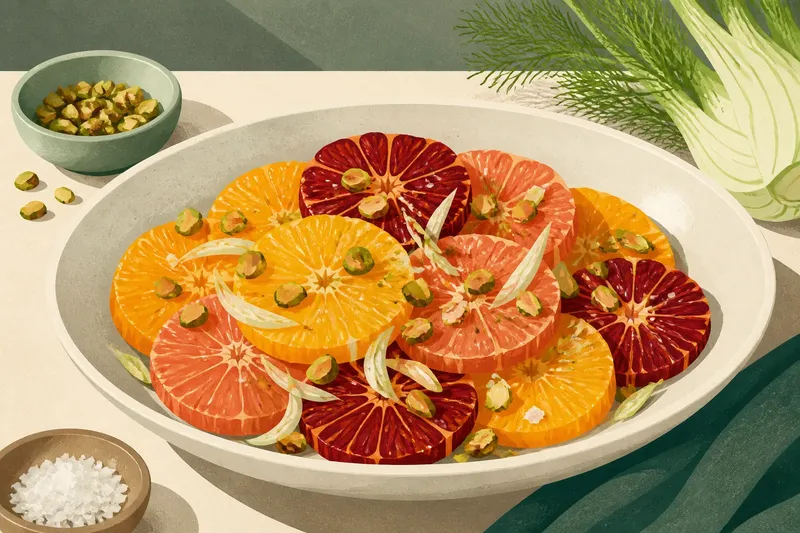
Imagine you are preparing a bowl for a quiet lunch: blood orange, navel orange, and pink grapefruit, peeled and cut into neat rounds. The fruit is juicy, sweet-tart, and vivid, but the plate looks wet and the flavors blur together. The aim is not to decorate every slice. It is to give the fruit a crisp edge, a clear accent, and enough restraint that citrus remains the subject.
Start with the fruit, not the garnish
Winter citrus varies in sweetness, bitterness, acidity, and juiciness. Taste a piece from each variety before choosing additions. A bowl built around sweet navel orange can welcome a sharper accent; one dominated by tart grapefruit may need a softer, rounder note instead.
Look at the cut fruit as well as tasting it. If it is already glossy and richly colored, a heavy drizzle or a pile of bright toppings will make the bowl feel crowded. If the pieces are pale and releasing little juice, a contrasting ingredient can bring definition without requiring extra decoration.
For the imagined lunch, the blood orange supplies deep color, the navel orange brings sweetness, and the grapefruit contributes bitterness. The useful contrast is therefore texture and a restrained savory note, not another strong fruit flavor. That decision narrows the field before the garnish bowl comes out.
Choose one crisp element and one quiet accent
Toasted pistachios offer crunch and a green fleck that sits well beside orange and pink. Their mild richness also cushions grapefruit’s bitterness. Chop them coarsely enough to register as a texture, but not so finely that they turn into a coating.
For a second accent, consider a few thin slivers of fennel or a small pinch of flaky salt. Fennel has a fresh, lightly anise-like character that can echo citrus without adding sweetness. Salt sharpens the fruit’s existing flavors, but a little goes a long way; scattered crystals are easier to judge than a broad seasoning.
These additions do different jobs. Pistachio changes the bite; fennel adds a cool aromatic note; salt adjusts the flavor. Choose one of the latter two rather than using both automatically. A garnish is not a committee meeting.
In the hypothetical lunch, you choose pistachio and a few fennel slivers. The expected result is a crisp bite followed by a gentle, fresh aroma, while the citrus stays prominent. If the fruit tastes especially tart, the fennel can be left out and a small spoonful of honey offered separately instead.
Keep the colors distinct and the surface open
Color works best when it helps the fruit read clearly. Green pistachio against orange and grapefruit gives the eye a defined accent. A few dark pomegranate seeds could do the same, but they add tartness and juice as well as color, so they are not interchangeable with a dry nut.
Arrange the citrus in a shallow bowl or on a plate, leaving some of the fruit visible between additions. Scatter the pistachios lightly across the top and tuck the fennel into a few gaps. Think of the garnish as a bookmark in a book: it marks the place without covering the page.
Keep wet ingredients separate until serving. A spoonful of honey or a little citrus juice can make the fruit glossier, but it can also pool at the bottom and soften crisp toppings. If the bowl needs extra sweetness, offer the honey at the table so each person can decide.
What should you adjust before serving?
What if the grapefruit tastes very bitter?
Use more sweet orange in the bowl, or serve a little honey on the side. Avoid piling on several sweet toppings, which can make the fruit taste heavy rather than balanced.
Can you use almonds instead of pistachios?
Yes. Sliced toasted almonds provide a crisp, mild contrast, though they bring less color. Choose unsalted nuts if you plan to finish the fruit with flaky salt.
Should the garnish be added ahead of time?
Add nuts and delicate fennel shortly before serving so they retain their texture and fresh aroma. The citrus itself can be arranged earlier and kept covered in the refrigerator.
What can replace fennel?
Use a small amount of thinly sliced celery for a clean, crisp note, or omit the aromatic accent altogether. The bowl still works if the fruit and pistachio already provide enough contrast.
Let the bowl tell you when to stop
For the invented lunch, the final bowl has visible orange and grapefruit, scattered pistachio, and just enough fennel to suggest freshness. The fruit remains easy to pick up and taste on its own. The expected observable change is a more varied bite, not a new flavor that overwhelms the citrus.
That is the useful planning habit: taste first, identify the missing quality, then add an ingredient that supplies it. A bright finish for a winter citrus bowl does not require a long list of toppings. It requires a clear choice between crunch, aroma, sweetness, and salt—and the discipline to leave the rest in the cupboard.